Why a brand new panel is the one that looks wrong
Your car has not been its factory color for years, which is exactly why matching it is skilled work.
September 6, 2026 · 3 min read
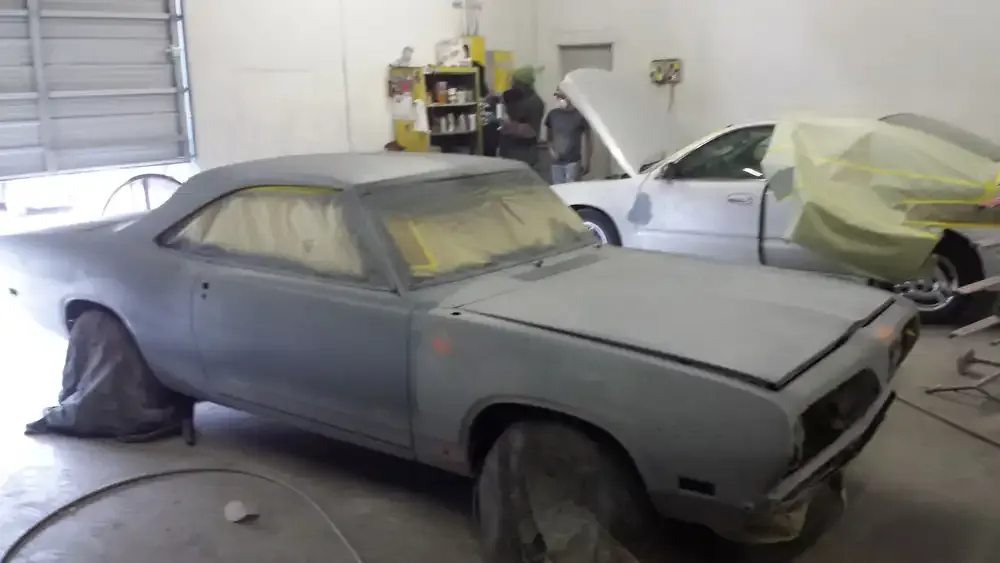
There is a particular kind of bad repair that everyone recognizes and almost nobody can explain. The bodywork is straight, the panel gaps are even, and yet the repaired door or fender is somehow obviously the repaired one. It sits there looking slightly too clean, slightly too bright, like a patch.
What has usually happened is that the shop sprayed the factory paint code and called it matched. On a car that left the factory last month, that works. On a car that has spent a few summers in North Texas, it does not.
The paint on your car is not the paint that was on your car
Automotive paint is a pigment suspended in a binder, protected by a clear coat. Ultraviolet light attacks all three. Over years the clear coat thins and loses some of its ability to refract light the way it originally did, and the pigment itself fades, some pigments considerably faster than others.
The result is that a five year old silver is not the silver it was. A red has usually shifted noticeably. Even a plain white drifts, picking up a slightly different cast depending on how the car has been parked and how often it has been washed.
None of this is a defect. It happens to every car. Texas simply does it faster, because we get more ultraviolet exposure than most of the country and a lot of cars sit outside all day.
Why the code makes it worse, not better
The paint code on the sticker in your door jamb describes the color the car was when it was built. Mixing to that code produces a technically perfect reproduction of a color your car no longer wears.
So the freshly sprayed panel is not wrong in isolation. It is wrong in company. Put next to three panels that have aged, it reads as newer, and the human eye is extremely good at spotting that, even in people who could not tell you which panel is the odd one out.
What actually matching involves
The code is a starting point, not an answer. From there the work is empirical.
- Mix to the code as a base
- Spray a test card, not the car
- Hold the card against the actual panel, in daylight rather than under shop lights
- Adjust the tint and spray another card
- Repeat until the card disappears against the car
Only then does anything go near the vehicle. Getting to that point can take several attempts, and the attempts are the job. A shop that goes straight from the code to the car has skipped the part where the matching happens.
Blending, and why a panel edge is a bad place to stop
Even a very good match benefits from blending. Rather than stopping the new color hard at the seam between two panels, the paint is faded outward into the neighboring panel so there is no hard edge for the eye to catch.
It uses more material and more time, and it is the difference between a repair you have to be told about and one you can find from the pavement. Metallics and pearls in particular are unforgiving here, because they change appearance with viewing angle, so any hard line shows up as the light moves.
Then it has to cure
Paint is not finished when it stops being wet. It continues to harden for a while afterward, and a car that is reassembled and handed back too early can end up with marks pressed into a finish that had not yet reached full hardness.
Waiting is unglamorous and it is the step under most pressure when a shop wants the bay back. It is worth asking about.
How to judge a paint job
Look at the car outside, in daylight, from about ten feet away, and walk around it slowly so the light moves across the panels. Then get closer. Check that the color carries through the blend without a visible line, and look at the edges of the repaired area for texture that does not match the surrounding surface.
If you want an opinion on a repair somebody else did, or you want to talk through a repaint on a car whose clear coat has started peeling, we are at 3578 Forest Ln in Garland. Estimates are free and take about 10 to 15 minutes. Call (972) 494-1977.
Sure Shot Collision Repair — (972) 494-1977
Call (972) 494-1977More articles
The first hour after a wreck, and what it saves you later
Most of the arguments that happen weeks after a collision are decided in the first hour, usually by what nobody thought to photograph.
After the hail: when dents come out without paint, and when they do not
A bad ten minutes of hail leaves a car covered in dimples, and most of the time the paint is completely untouched.